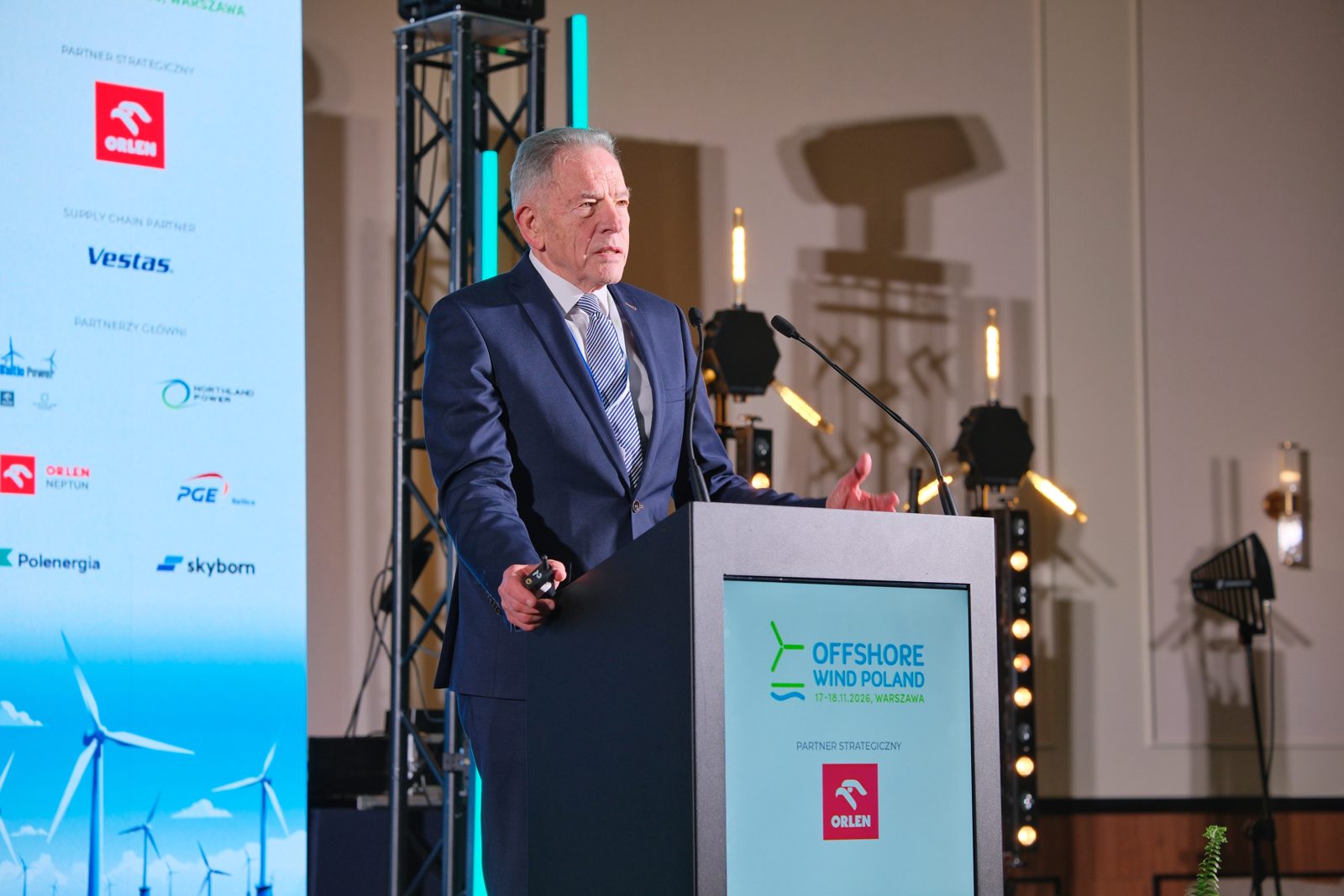
How can the Polish economy build its competitiveness in a world where cheap energy, free trade and international stability can no longer be taken for granted? Prof. Dariusz Rosati, President of the Foundation for Science, Innovation and Entrepreneurship, spoke about the role of offshore wind in responding to these challenges at Offshore Wind Poland 2026, the largest conference in Poland dedicated to offshore wind energy.
On 17 November 2026, Prof. Dariusz Rosati, President of the Foundation for Science, Innovation and Entrepreneurship (Fundacja na rzecz Nauki, Innowacji i Przedsiębiorczości, FNIP), spoke at Offshore Wind Poland 2026 in Warsaw, organised by the Polish Wind Energy Association (PSEW). His address, 'The Polish economy facing global challenges. Offshore wind as a driver of dynamic competitiveness', focused on the changing conditions for Poland's economic development and the role of the energy transition in building its competitive advantage.
New conditions for the development of the Polish economy
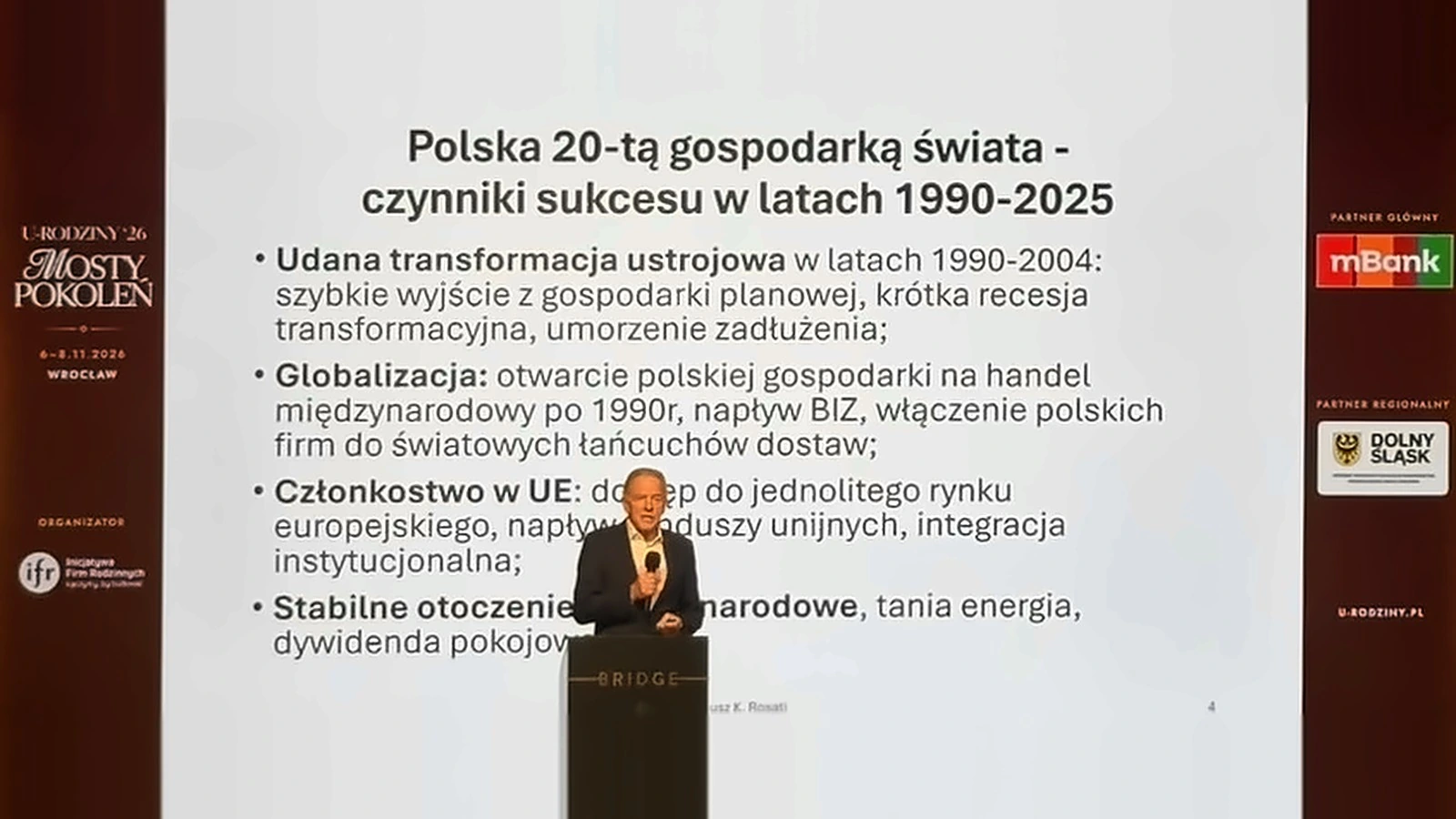
The address opened with a review of the past 35 years. Thanks to a successful political and economic transition, openness to trade and foreign investment, membership of the European Union and favourable international conditions, including access to cheap energy, Poland has become the world's 20th-largest economy.
These conditions are now changing fundamentally. The end of 'hyper-globalisation', growing geopolitical uncertainty and the increasing importance of security of supply mean that the competitiveness of economies now depends more and more on their resilience and ability to adapt quickly.
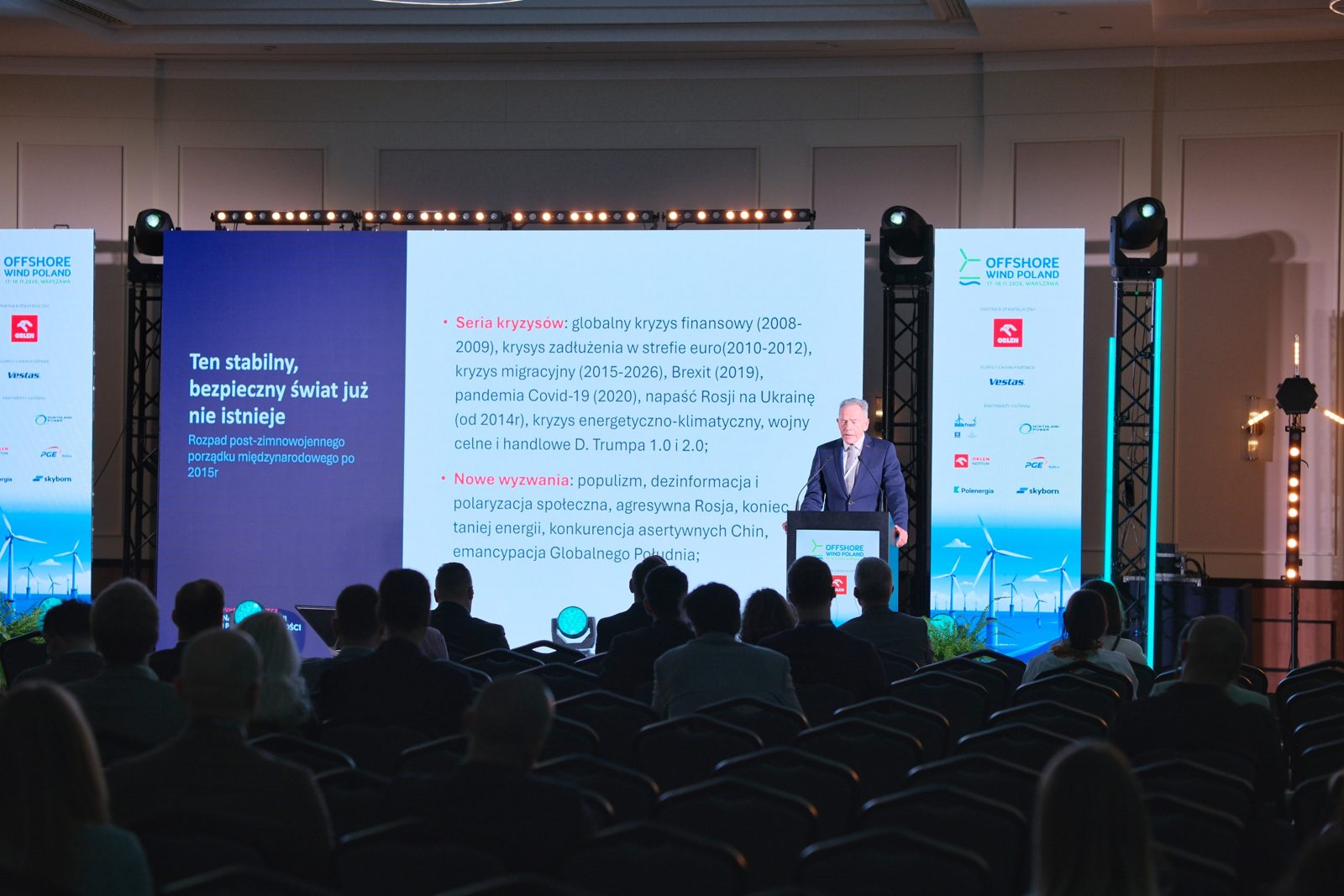
Energy as a factor of competitiveness
Among the structural weaknesses of the Polish economy, Prof. Rosati pointed to low levels of investment, insufficient cooperation between science and business, a lack of companies with global reach and the 'middle-link' trap in global value chains.
High energy prices remain one of the key barriers to growth. Although coal's share of Poland's energy mix has fallen from 79% to 52%, Poland still has the highest share of coal in the European Union, and its electricity prices are among the highest in Europe.
Offshore wind as a development opportunity
In Prof. Rosati's view, the development of offshore wind can play an important role in changing this situation. Generating energy in the Baltic Sea makes it possible to reduce dependence on imported fuels, strengthen energy security and create conditions for lower and more predictable energy prices. Its production is also not directly burdened by the cost of CO₂ emission allowances under the EU ETS.
Offshore wind is not only part of the energy transition but also one of the foundations for building the dynamic competitiveness of the Polish economy. Its development can help fill the gap left by conventional power sources as they are gradually phased out and create more favourable conditions for Poland's long-term economic growth.